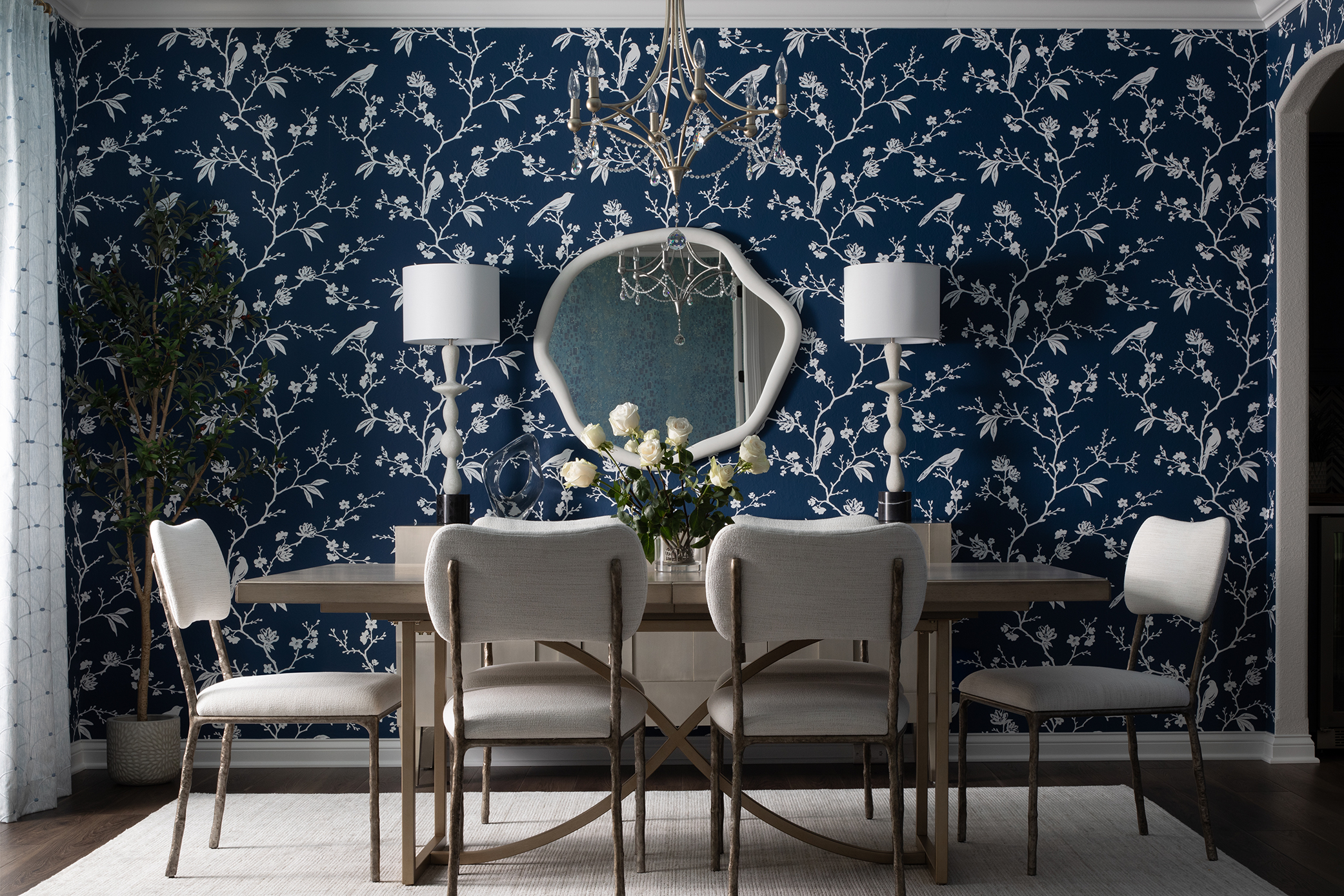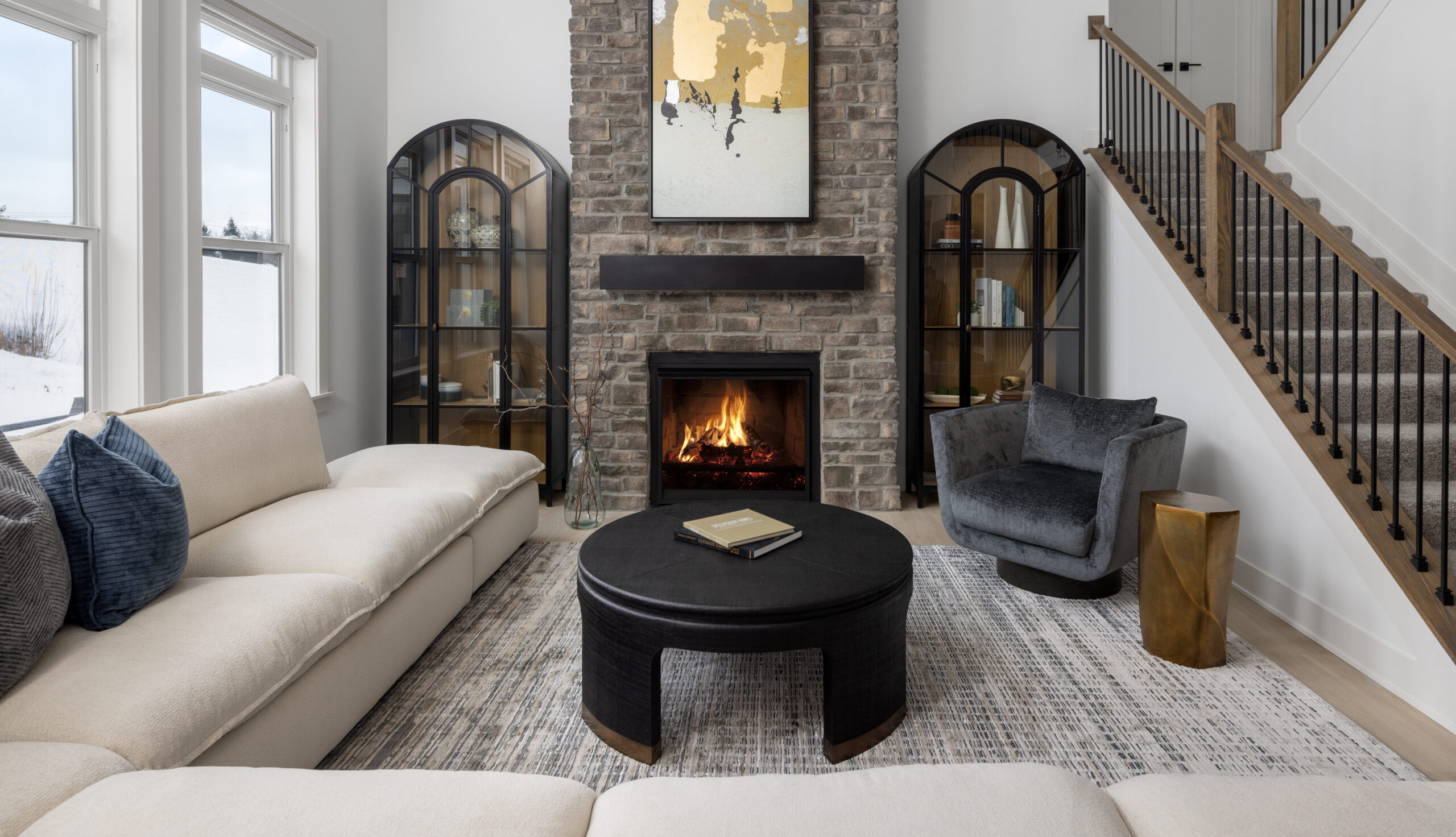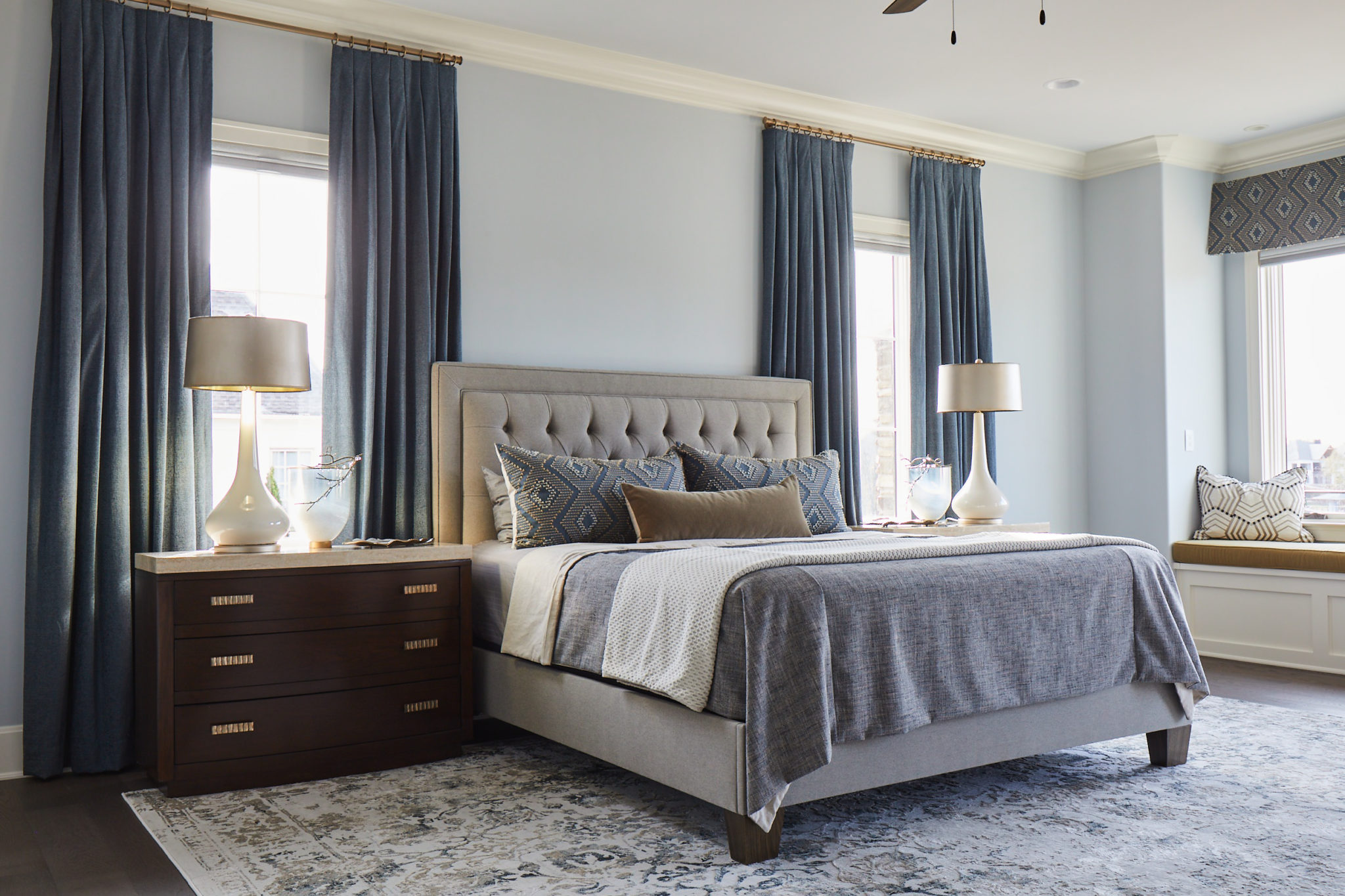

Patterns are often a great way to tie a color palette together and evoke emotion or style into a room, such as a traditional floral, a geometric trellis, a classic stripe, a painterly brushstroke, or a bold leopard print. Any one of these patterns will add fun and interest to a space-but think of how dramatic it would be if you used all of them! By paying attention to the colors, the scale, and balance, you can develop a visually interesting space that feels nuanced and personalized. Here’s a few things we consider when playing with patterns:
- How many colors would you like to use? For monochromatic color palettes this is easy, your neutral of choice + your color/other netural of choice. For more complex color palettes, we will use the 60/30/10 method to balance the use of color through-out the room. We often will have one pattern that becomes the focal pattern that all of the other colors are pulled from. This keeps everything pulled together and looks intentional.
- What’s your pattern tolerance? This is often a question we ask our clients on their complimentary consultation. Some like the calming nature and longevity of solids, and would prefer only one pattern. Others like the layered indulgence of more maximalist rooms and get excited from having 6 or more patterns. Each person’s unique pattern tolerance determines how much pattern is too much pattern, or not enough for them, and there is no wrong answer!
- Are there any types of patterns you don’t like? There’s a lot of types of patterns out there: florals, plaids, stripes, paisleys, damask, checks, ikats, animal print, houndstooth, chevrons, and the list goes on! Certain design styles have patterns that are a part of the aesthetic, such as large florals in chinoiserie, or tickling in farmhouse.
- What scale should those patterns be in? It’s ideal to mix up the scale of patterns when pairing them together, such as a large scale botanical with a small stripe like tickling, or a small houndstooth with a large scale plaid. Large scale patterns often have a vertical repeat of 27″ or more, and small scale ones can be as tiny as .5″ which can almost feel like a solid fabric. Mixing these creates interest, and lets each be unique.
Feel free to play with pattern. An easy place to start to add pattern is in accent pillows, window treatments, accent chairs, bedding, wallpaper, and rugs, but it can also be in the flooring, tile, architecture, sofa, or even in the casegoods! Want help pulling it all together? Give us a call/text, we’re happy to help!