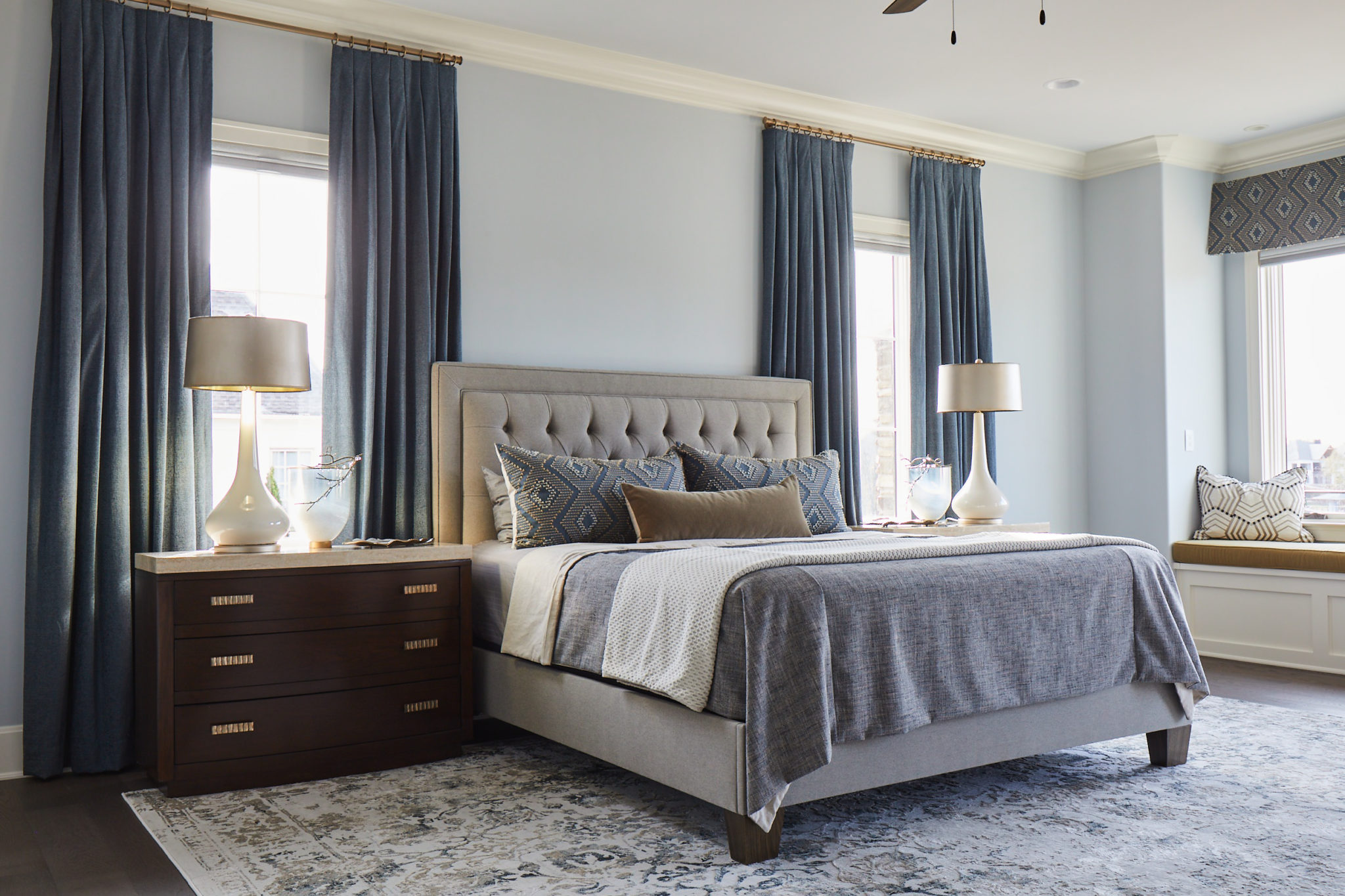
Having trouble getting a restful sleep? Maybe it’s not just the mattress, but the whole room that is affecting your sleep habits. At around a third of everyday, bedrooms start and end your day and are one of the rooms we spend the most time in at home. However, designing your bedroom for a calm, rejuvenating sleep doesn’t mean it has to feel like a hotel room, or clinical like a hospital. Here’s a few thoughts to consider when designing your retreat.
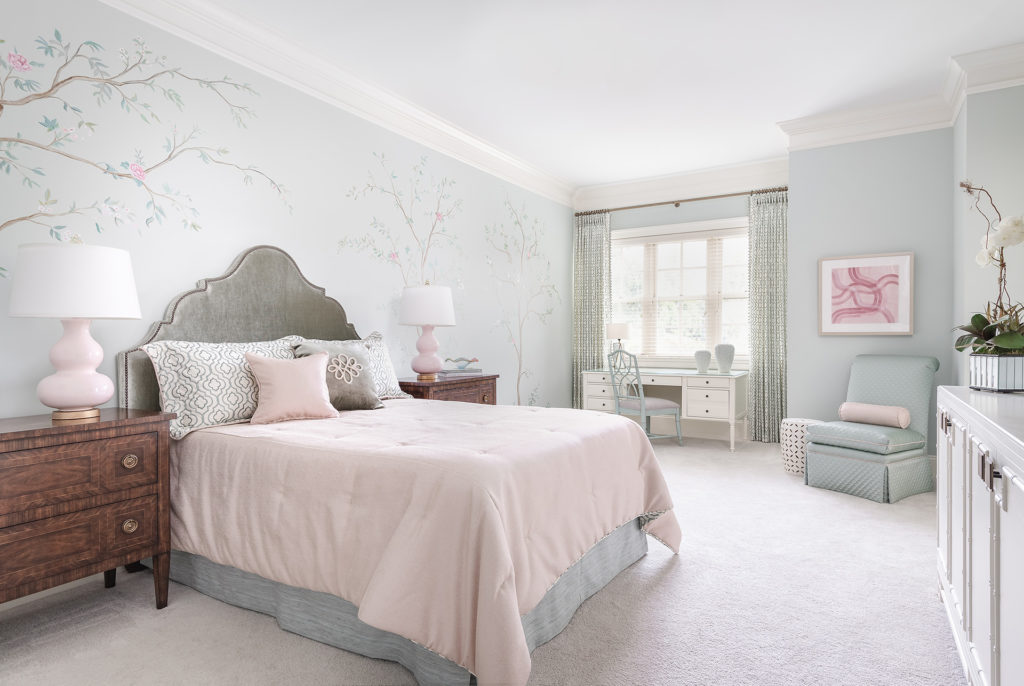
- Calming Colors – Low saturated muted colors are perfect for a bedroom. Blues and greens are known for their calming properties, but other nature inspired hues such as clay, taupe, creams, and browns can also be calming and centering.

- Low Lights – Bedrooms are enhanced by having different levels of lighting. During the day, it’s great for these rooms to feel bright and have a lot of light, but at night time you can help encourage your body that it’s time to rest by limiting the light and getting a more moody and dark space. By having layered lighting such as a chandelier, bedside lighting, and accent lighting, you can easily adapt the space for the time of day.

- Window Treatments – Custom Window Treatments can bring the whole room together and help by adding privacy and light protection. If you have an alternate sleep schedule, room darkening window treatments can go along way with helping you maintain your sleep schedule against the sun.

- Bedding for You – Select bedding that fits your preferences. Do you sleep hot? Cold? Select layers that complement your sleep. From coverlets and quilts, to comforters and duvets, even sheets and bed scarves, there’s lots of foundational layers to use to create a perfect combination for you and your preferences.

- Make it Cool – Experts suggest setting your thermostat down to 68 or lower at night for optimal sleep. If you need airflow, having desk or ceiling fans can help circulate the air around the room to make it feel more comfortable.
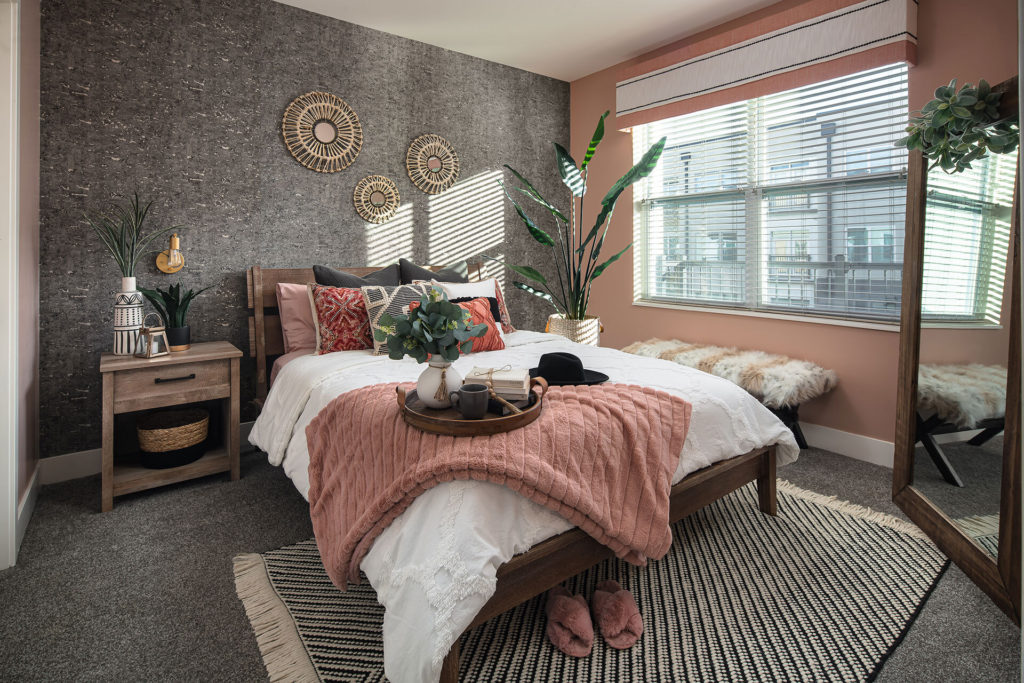
- Tech-free – This one can be a hard subject, especially if sleeping with the tv on is a must, or late night scrolling is a vice, but giving yourself a 1-hour buffer with no screens before bed has been shown to improve sleep quality as well. If nothing else, automatic tv timers that will turn off after an hour or two can help you stay in a restful sleep once you get there.
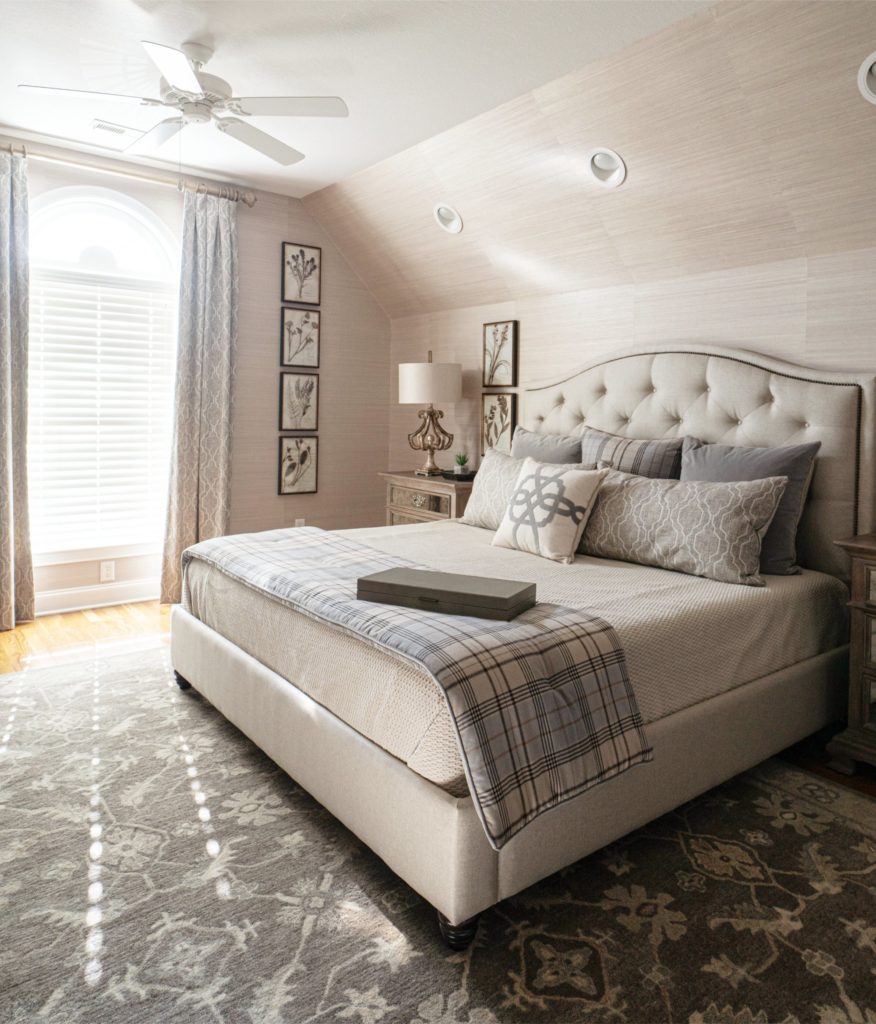
- Clutterfree – Admittedly, the bedroom is a private space, so sometimes it’s the last to be tidied up, or isn’t held to the same standard as the rest of the house. Reducing the visual clutter can help give you a fresh perspective on everyday, and let’s you go to sleep with less pressing “to-do” around you as you retire for the night.
Having trouble balancing both of your preferences, call us today for a complimentary consultation to see how we can help you create the bedroom retreat of your dreams!